N-Type VS. P-Type Solar Panels: Which One Should You Choose?
As homeowners and businesses increasingly turn to renewable energy to slash utility bills and bolster sustainability, the solar market has evolved rapidly. When you begin researching photovoltaic systems, you will inevitably encounter a technical fork in the road: the choice between N-Type and P-Type technologies.
At Xinjie, a leading global pipeline system solution provider with deep roots in advanced solar manufacturing, we understand that navigating these specifications can be daunting. Understanding the difference between n type and p type solar panels is crucial for maximizing your return on investment. This guide breaks down the science, benefits, and practical applications of each technology.
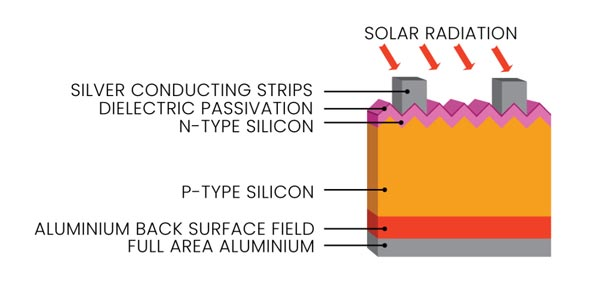
Materials and Structure of a Solar Cell
To understand the performance differences, we must first look inside the cell. While construction varies by manufacturer, the core principle involves a P-N Junction. This is the interface between two types of silicon wafers: one positively charged (P-type) and one negatively charged (N-type).
The distinction lies in the "doping" process. Solar cells are made of crystalline silicon (c-Si). To create an electric field capable of generating current, manufacturers infuse (or dope) the silicon with specific chemicals. The arrangement of the bulk region versus the thinner emitter region defines whether a panel is categorized as N-Type or P-Type.
What are N-Type Solar Panels?
So, what is n type solar panel technology exactly? In an N-Type cell, the bulk silicon wafer is doped with phosphorus, giving it a negative electrical charge. The top emitter layer is then doped with boron to create the necessary positive charge.
This structural inversion offers significant advantages. Because the bulk region uses phosphorus instead of boron, n type solar panels are immune to a phenomenon known as Light-Induced Degradation (LID). LID is a common issue where panels lose efficiency immediately after first exposure to sunlight. By eliminating the boron-oxygen defect responsible for this, N-Type panels maintain higher efficiency over a longer lifespan. Although they historically cost more to manufacture, recent advancements by leading solar panel manufacturers in china have made them increasingly competitive.
What are P-Type Solar Panels?
P-Type panels have dominated the solar industry for decades. In these cells, the bulk silicon region is doped with boron to create a positive charge, while the top emitter layer is doped with phosphorus.
The popularity of the p type solar panel stems from history. This technology was originally developed for space applications due to its high resistance to cosmic radiation. As the terrestrial solar market grew, manufacturers scaled up P-Type production because the technology was mature and well-understood. Consequently, P-Type panels, such as standard PERC modules, offer a compelling balance of performance and affordability for budget-conscious projects.
N-Type VS. P-Type Solar Panels
When weighing n type vs p type, the decision often comes down to a trade-off between upfront cost and long-term yield. While visually similar, their performance metrics diverge significantly over time.
Efficiency: N-Type panels are generally more efficient. Top-tier N-Type modules can achieve efficiency levels exceeding 25.7%, whereas standard P-Type panels typically hover around 23.6%. This makes N-Type the superior choice for installations with limited roof space where energy density is paramount.
Degradation: As mentioned, P-Type panels suffer from boron-oxygen defects. When boron reacts with oxygen in the atmosphere under sunlight, it creates impurities that impede electron flow, reducing performance by 2-3% in the first year alone. N-Type panels, using phosphorus, bypass this chemical reaction entirely, ensuring stable output for decades.
Cost Dynamics: P-Type technology benefits from massive economies of scale. The supply chain is mature, making these panels cheaper to produce and buy. However, the longevity and higher output of N-Type panels often result in a lower Levelized Cost of Energy (LCOE) over a 25-year period.
Pros and Cons of N-type and P-type Solar Panels
To simplify your decision, here is a direct comparison of the strengths and weaknesses of each technology.
Pros of N-Type Panels
Zero LID: Immune to Light-Induced Degradation, ensuring higher power retention.
Longevity: Often warrantied for 30 years with lower annual degradation rates.
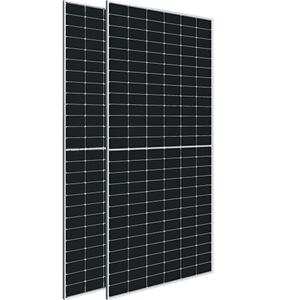
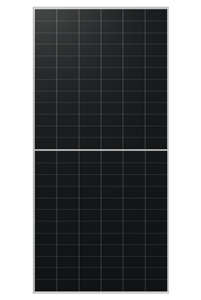
High Efficiency: Ideal for maximizing power output, such as with our premium solar panel 585w factory models.
Temperature Coefficient: Performs better in hot climates compared to P-Type.
Cons of N-Type Panels
Higher Cost: More complex manufacturing processes lead to a higher initial price tag.
Availability: While growing, they are less ubiquitous than standard P-Type options.
Pros of P-Type Panels
Affordability: The most cost-effective option for large-scale installations.
Proven Track Record: Decades of field data support their reliability.
High Radiation Resistance: Excellent durability in specific harsh environments.
Cons of P-Type Panels
LID Susceptibility: Expect a slight initial drop in power output.
Lower Efficiency Cap: Technology is nearing its theoretical efficiency limit.
Which Solar Panel is Right for You?
Choosing between P-Type and N-Type depends on your specific project constraints. Consider your budget, energy goals, and physical space.
Choose N-Type If: You have limited roof space but high energy consumption. The higher efficiency means you generate more power per square foot. Additionally, if you are looking for a long-term investment with minimal degradation, N-Type offers the best future-proofing.
Choose P-Type If: You have ample installation space (like a ground mount system) and are prioritizing a lower upfront cost. For many residential projects, standard PERC P-Type panels still offer excellent ROI and reliability.
Knowledge about Other Type of Solar Panel
Beyond the N vs. P debate, it is worth noting other variations:
Monocrystalline: Made from single-crystal silicon, these offer the highest efficiency and sleek aesthetics. Both N-Type and premium P-Type panels fall into this category.
Polycrystalline: recognizable by their blue hue, these are older technology with lower efficiency, largely being phased out in favor of mono-PERC and N-Type solutions.
Conclusion
The solar industry is shifting. While P-Type panels have served as the backbone of the renewable revolution, N-Type technology is rapidly becoming the new standard for high-performance installations. By understanding the difference between n type and p type solar panels, you can make an informed choice that balances immediate costs against lifetime savings.
At Xinjie, we offer a comprehensive range of solutions, from cost-effective single-glass PERC panels to cutting-edge N-Type modules. Whether you are powering a home or a commercial facility, our expertise ensures you get the right system for your needs.
FAQ about N-Type & P-Type Solar Panels
What is the primary difference between N-Type and P-Type solar panels?
The main difference is the chemical doping of the silicon wafers. P-Type is doped with boron, while N-Type is doped with phosphorus. This chemical difference makes N-Type immune to Light-Induced Degradation (LID) and generally more efficient.
How does the performance of N-Type and P-Type solar panels compare in high temperatures?
N-Type panels typically have a lower temperature coefficient, meaning they lose less efficiency as the temperature rises compared to P-Type panels. This makes them superior for hot climates.
Are N-Type solar panels more expensive than P-Type?
Yes, currently N-Type panels command a premium due to the more complex manufacturing process. However, the gap is closing, and the higher energy yield over the system's life often offsets the upfront cost.
If you have any questions or need further assistance in selecting the perfect solar solution, do not hesitate to reach out to the Xinjie team.