Solar Panel Charge Time Calculator Guide
Solar Panel Charge Time Calculator: Accurately Estimate How Long to Charge Your Battery

Introduction
Figuring out how long it takes a solar panel to charge a battery sounds straightforward — until you realise how many variables are actually involved. Panel wattage, battery capacity, depth of discharge, controller type, and daily sunlight hours all affect the final number. Get any of them wrong, and you'll either undersize your system or waste money on capacity you don't need.
That's exactly where a solar panel charge time calculator earns its keep. Instead of relying on guesswork, a proper calculator turns real-world data into a reliable estimate — one that accounts for all the factors that matter. This guide walks you through the variables, the maths, and a practical case study so you can size your setup with confidence in 2026.
What Affects Solar Battery Charging Time?
Several factors interact to determine how long your battery takes to reach full charge. Here are the most significant:
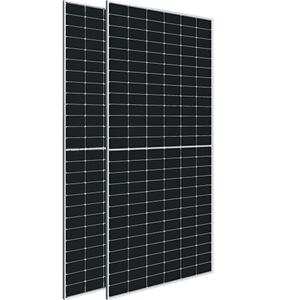
Panel wattage — Higher wattage means faster energy delivery. A 200W panel charges a battery roughly twice as fast as a 100W panel under identical conditions. High-output options like Trina solar panels 695W wholesale modules illustrate how much panel efficiency has advanced.
Battery capacity (Ah) — A 100Ah battery holds twice the energy of a 50Ah unit and will take proportionally longer to fully charge under the same solar input.
Battery voltage (V) — A 24V 100Ah battery stores more energy than a 12V 100Ah unit, so it requires a longer charge time even though the Ah rating is the same.
Depth of Discharge (DoD) — Only the discharged portion needs to be replenished. A LiFePO4 battery regularly discharged to 80% DoD will take longer to refill than one discharged to 50%.
Sunlight availability — Location, panel tilt, season, and shading all affect the number of usable peak sun hours per day. A system in southern Spain will consistently outperform the same setup in northern Germany.
Charge controller type — MPPT controllers convert 90–95% of available solar energy into charge. PWM controllers manage only 75–80%. The difference can translate to several hours of charging time on a given day.
| Battery Size | Voltage | Panel | Controller | Est. Charge Time |
|---|---|---|---|---|
| 100Ah LiFePO4 | 12V | 100W | PWM | ~13–15 hrs |
| 100Ah LiFePO4 | 12V | 100W | MPPT | ~9–11 hrs |
| 200Ah LiFePO4 | 24V | 200W | MPPT | ~8–10 hrs |
Assumes clear skies, correct tilt angle, and 5 peak sun hours per day.
LiFePO4 vs Lead-Acid: Which Charges Faster and Why?
LiFePO4 batteries charge significantly faster than lead-acid — and the chemistry explains why.
Lead-acid batteries are typically limited to 50% usable depth of discharge. Pushing deeper accelerates degradation. LiFePO4 batteries, by contrast, routinely operate at 80–90% DoD without harm. That means less energy needs to be replaced per cycle, reducing time under charge.
LiFePO4 cells also accept higher charge current during the bulk phase and hold a consistent voltage throughout discharge and recharge. Lead-acid batteries slow their charge acceptance as they approach full capacity, extending the overall process.
| Metric | LiFePO4 | Lead-Acid |
|---|---|---|
| Usable DoD | 80–90% | 50% |
| Cycle Life | 3,000–6,000+ | 300–500 |
| Charge Acceptance | High | Low |
| Full Charge Time | Shorter | Longer |
When you run the same inputs through a solar battery charge calculator, LiFePO4 comes out ahead on every metric. Xinjie LiFePO4 batteries are rated for 6,000+ cycles at 80% DoD — a lifespan that makes the upfront premium easy to justify.
How to Calculate Charging Time Using a Solar Panel
Understanding how to calculate charging time of battery by solar panel doesn't require an engineering degree. Follow these four steps:
Step 1: Convert Amp-Hours (Ah) to Watt-Hours (Wh)
Multiply battery capacity by system voltage:
Wh = Ah × V
Example: 80Ah × 12V = 960 Wh
Step 2: Apply Depth of Discharge
Only the discharged portion needs replacing. At 80% DoD:
960 Wh × 0.80 = 768 Wh to replenish
Step 3: Account for Controller Efficiency
With an MPPT controller at 95% efficiency and a 30W panel:
30W × 0.95 = 28.5W effective output
Note: A 30 amp solar charge controller paired with a small panel array is a common choice for 12V cabin and RV setups — just ensure the controller's amperage rating matches your panel configuration.
Step 4: Final Charging Time Formula
Charging Time = Energy to Restore (Wh) ÷ Effective Panel Output (W)
768 Wh ÷ 28.5W = ~26.9 hours of peak sunlight
| Battery | Panel | Controller | DoD | Charge Time |
|---|---|---|---|---|
| 100Ah / 12V | 30W | MPPT | 80% | ~32 hrs |
| 100Ah / 12V | 100W | MPPT | 80% | ~9.6 hrs |
| 200Ah / 24V | 200W | MPPT | 80% | ~9.6 hrs |
Case Study: Off-Grid Cabin Setup (With LiFePO4 Batteries)
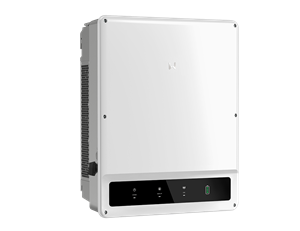
A remote off-grid cabin runs on a 48V solar system with a 3kW hybrid inverter, four 400W panels in series, and a Xinjie 48V 100Ah LiFePO4 battery bank managed by an MPPT charge controller.
Total storage: 4.8 kWh. At 80% DoD, that's 3.84 kWh to recover each day. Real-world panel output, accounting for ~80% system efficiency (inverter losses, wiring, heat), lands around 1.28 kW effective.
Result: approximately 3 hours of peak sunlight to fully recharge the battery bank. Using a solar charging calculator to verify this before installation prevented both an undersized panel array and an oversized battery bank — saving the owner real money.
What stood out was the Xinjie battery's consistency. Even on partially cloudy days, voltage stayed stable and recharge times remained predictable — something the cabin's previous lead-acid setup never managed reliably.
Do You Need a Charge Time Calculator? Why It Matters
Manual calculations are easy to get wrong. People routinely forget to de-rate panels for real-world conditions, misapply DoD, or overlook controller efficiency. The result is either an oversized system (wasted budget) or an undersized one (energy shortfalls at the worst possible time).
A solar charge time calculator removes that uncertainty. Whether you're managing an off-grid cabin, an RV build, or a home backup system, running the numbers before buying hardware ensures your setup actually delivers what you expect. It's also the fastest way to compare scenarios — different panel sizes, battery chemistries, or controller types — without committing to hardware you might regret.
Many of the top Chinese solar panel manufacturers including Xinjie provide specification data precise enough to feed directly into any reputable charge time calculator — watts, voltage, temperature coefficients, and more.
Solar Charge Controllers: Impact on Charging Speed
The charge controller sits between your panels and battery and has a bigger impact on charging speed than most people realise. There are two main types:
MPPT (Maximum Power Point Tracking) — Converts 90–95% of available panel output into usable charge. Best for larger systems and mismatched panel/battery voltages.
PWM (Pulse Width Modulation) — Delivers 75–80% efficiency. Lower cost and adequate for small, simple systems where panel and battery voltages are closely matched.
A practical example: charging a 12V 100Ah LiFePO4 battery under identical sunny conditions, an MPPT controller takes 5–6 hours. A PWM controller under the same conditions takes 7–8 hours. That's a meaningful difference when you're relying on solar as a primary power source.
For systems using a 30 amp solar charge controller, the choice between MPPT and PWM matters even more. A 30A MPPT unit will extract noticeably more energy per day from the same panel than a 30A PWM — particularly when panel voltage is significantly higher than battery voltage.
Using a solar panel charge time calculator that lets you toggle between controller types makes the efficiency difference immediately visible, helping you make the right call before purchase.
Conclusion
Accurate solar battery sizing comes down to understanding the variables and doing the maths properly. Panel wattage, battery chemistry, depth of discharge, and controller efficiency all feed into the final charging time — and missing any one of them skews the result.
A reliable solar battery charge calculator or manual calculation using the four-step method above will give you a realistic estimate before you invest in hardware. LiFePO4 chemistry, MPPT controllers, and properly matched panel arrays consistently deliver the best charging performance — as the off-grid cabin case study demonstrates.
At Xinjie, we've supplied solar panels and LiFePO4 storage systems to installers and off-grid projects worldwide since our founding. Our product specifications are built to integrate cleanly with any reputable charge time tool. Whether you're spec'ing a small RV system or a large commercial installation, getting the charge time right from the start is the foundation of a system that performs as promised — every day, for years to come.
Frequently Asked Questions
How do I calculate how long it takes a solar panel to charge a battery?
Multiply battery Ah by volts to get Wh, apply your DoD percentage, then divide by effective panel output (panel watts × controller efficiency). The result is the number of peak sun hours required to fully recharge.
Does an MPPT controller really make a difference to charge time?
Yes — significantly. MPPT controllers operate at 90–95% efficiency versus 75–80% for PWM. On a typical 100Ah system, this can reduce charging time by 2–3 hours per day under good sunlight conditions.
What size solar panel do I need to charge a 100Ah battery in one day?
Assuming 5 peak sun hours, 80% DoD, and an MPPT controller, you need approximately 200W of panel capacity to reliably recharge a 12V 100Ah LiFePO4 battery in a single day.
Is LiFePO4 worth it over lead-acid for solar storage?
For most applications in 2026, yes. LiFePO4 offers 80–90% usable DoD versus 50% for lead-acid, faster charge acceptance, and 3,000–6,000+ cycle life versus 300–500 cycles. The higher upfront cost is typically recovered within the first few years of operation.
What is a 30 amp solar charge controller used for?
A 30A solar charge controller is suited for small to medium off-grid systems — typically panels up to 400W on a 12V system or 800W on a 24V system. MPPT models in this range are ideal for cabins, RVs, and boat installations where maximising charging efficiency matters.