PERC Solar Cells: What You Need to Know
What You Need to Know About PERC Solar Cells
If you've been researching solar panels in 2026, you've almost certainly come across the term PERC. It's been the dominant solar panel cell technology for the better part of a decade — and for good reason. But what exactly makes a PERC cell different from a standard silicon cell, and is it still the right choice in a market that's rapidly shifting toward N-type alternatives?
This guide covers how PERC solar panels work, the types available, their pros and cons, and how they stack up on cost — so you can make a well-informed purchasing or installation decision.
How Standard Solar Cells Work
Before understanding PERC, it helps to know how a conventional solar panel cell generates electricity. Traditional solar cells contain two layers of silicon — an n-type (negative) layer and a p-type (positive) layer. When sunlight hits the cell, it knocks electrons loose from the n-type layer. The p-type layer accepts those electrons, creating an electric field — and that flow of electrons is what produces usable solar power.
It's a proven design, but standard PV cells suffer from several efficiency losses:
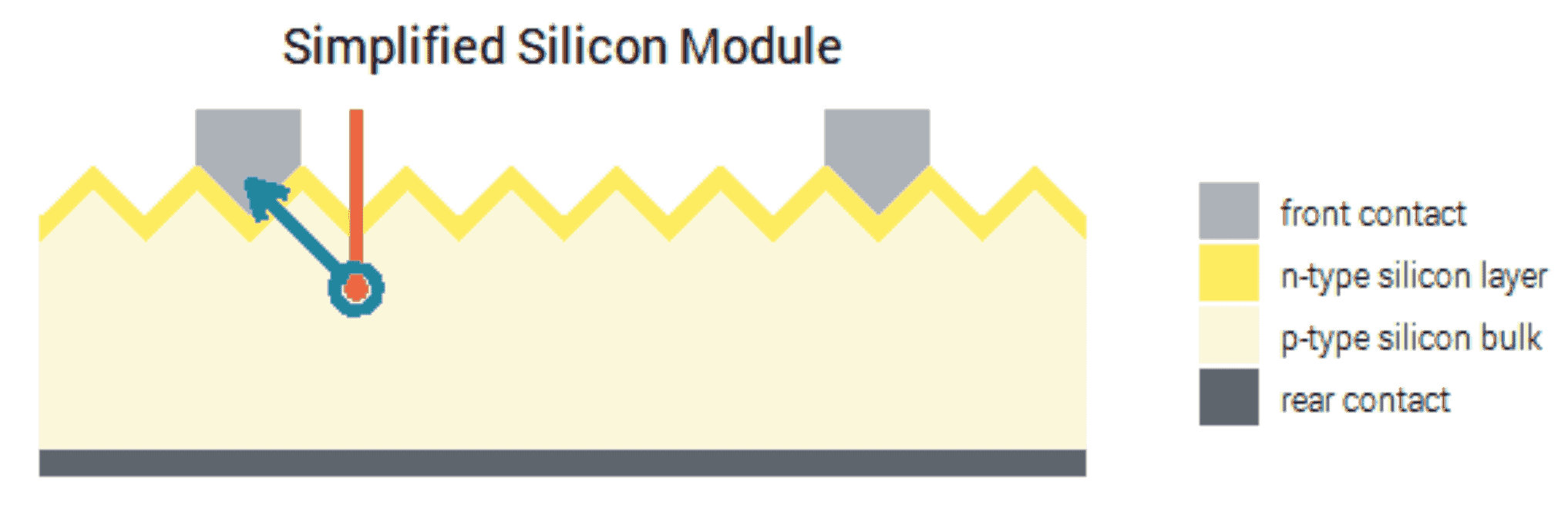
Light reflection and obstruction — Sunlight bounces off panel surfaces or is blocked by busbars and wiring.
Heat buildup — Especially when light hits the back surface of the cell, converting to heat instead of electricity.
Electron recombination — Free electrons recombine with the silicon material on the front or rear of the cell before they can be captured.
Light refraction — Scattered light knocks electrons out of alignment.
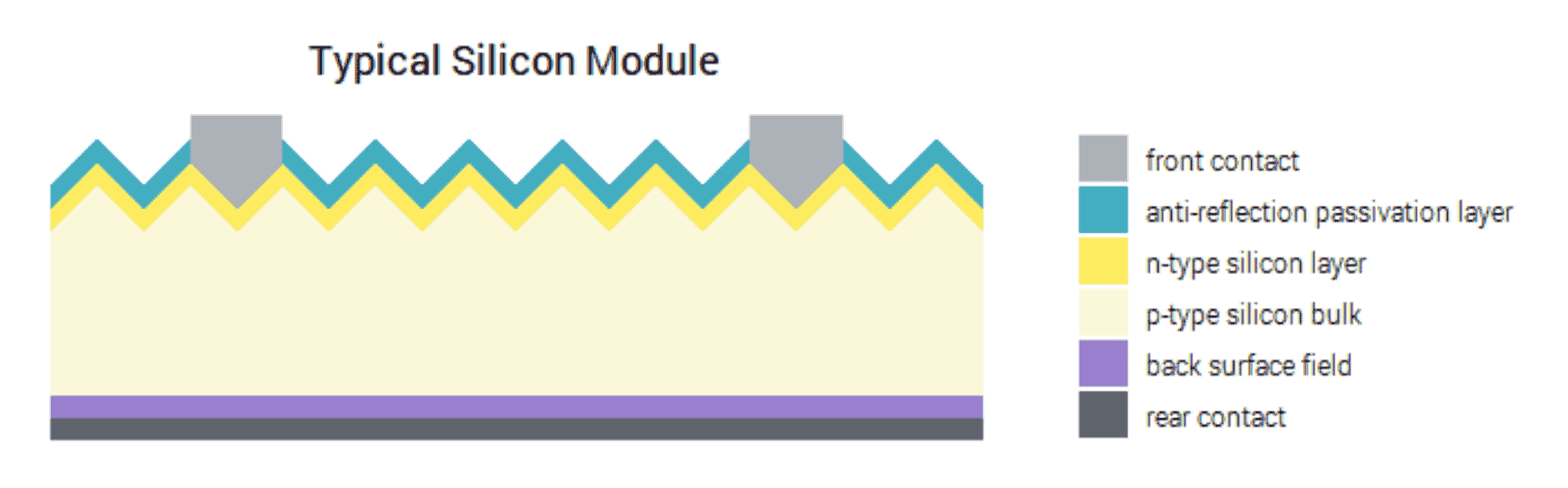
Engineers have addressed some of these problems — front passivation layers reduce reflection and front-side recombination, while back surface field layers help repel electrons from the rear contact. But excessive heating and rear recombination remain stubborn challenges. That's why standard silicon modules typically max out around 20% field efficiency.
What Are PERC Solar Panels and How Do They Work?
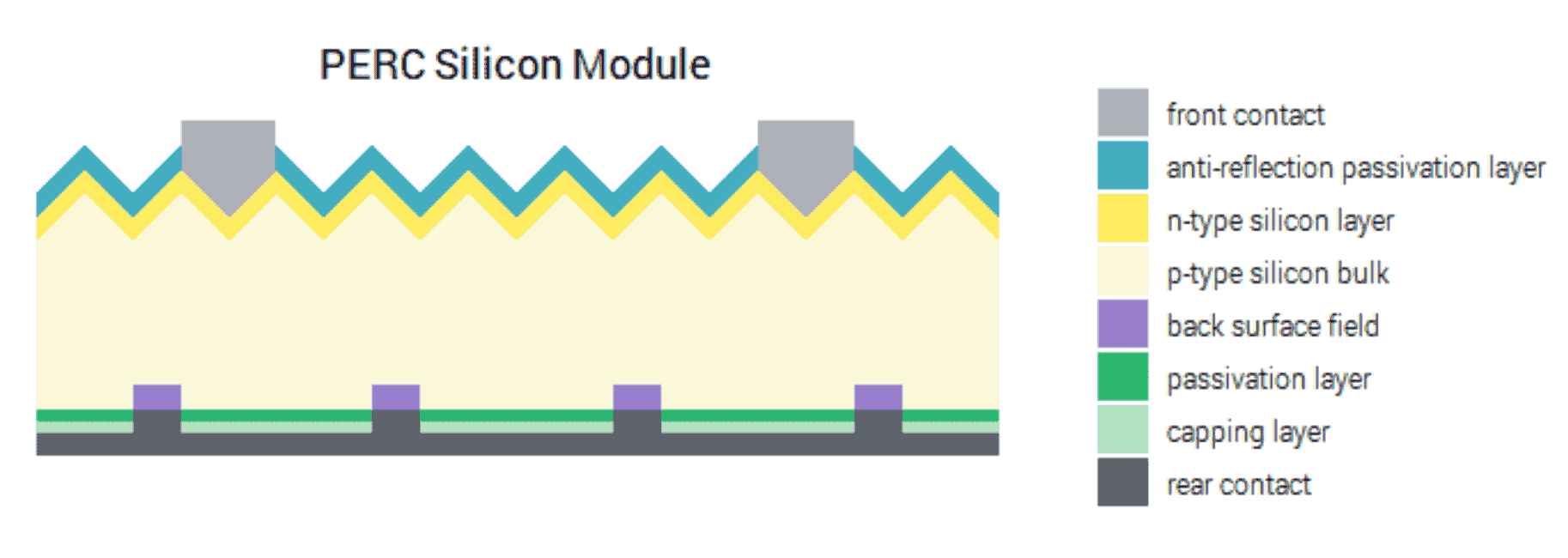
PERC stands for Passivated Emitter and Rear Cell. First introduced in 1989, PERC solar panels add a reflective passivation layer to the back of the cell. This extra layer does two critical things:
Reflects unused light back through the silicon layers, giving it a second chance to generate electrons.
Reduces rear recombination and heat absorption — longer wavelengths that would normally convert to wasted heat are reflected away from the rear surface.
Early commercial PERC modules struggled with light-induced degradation, but steady R&D improvements have resolved those issues. By 2026, perc solar panel technology achieves efficiencies up to 12% higher than traditional silicon counterparts.
For installers, that efficiency gain translates directly into fewer panels needed for the same output. Fewer panels means less racking, less wiring, fewer MLPE devices, and faster installation times. Even when roof space isn't a constraint, a project requiring 40 standard modules might only need 37–38 PERC modules — saving real time and money on every job.
PERC modules also perform particularly well on smaller roofs, partially shaded buildings, and in high-heat climates where standard cells lose output.
PERC Module Production
One of PERC's biggest advantages is manufacturing simplicity. Because PERC cells are structurally similar to conventional silicon cells, manufacturers can reuse existing production lines with minimal retooling. The additional passivation and rear contact capping layers add some cost, but this is largely offset by the efficiency gains — delivering higher lifetime energy output and better ROI for the end user.
As the technology has matured through economies of scale and ongoing R&D, production costs have continued to fall. Many of the top Chinese solar panel manufacturers — including Xinjie — have operated high-volume PERC production lines for years, bringing costs down to near-parity with conventional cells.
Types of PERC Solar Modules
Mono PERC Cells
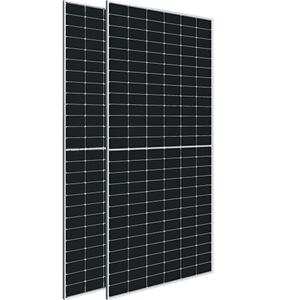
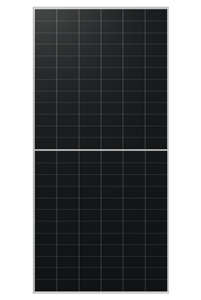
A mono PERC solar panel uses monocrystalline cells cut from a single silicon crystal. This uniform structure delivers higher efficiency compared to polycrystalline alternatives. Adding the PERC passivation layer pushes that efficiency even further — which is why mono PERC solar panel modules have become the default choice for most residential and commercial installations in 2026.
Poly PERC Cells
Polycrystalline PERC cells are made from blended silicon shards rather than a single crystal. This yields lower efficiencies but costs less to manufacture. Adding a PERC layer significantly improves polycrystalline performance without dramatically increasing production costs.
However, because higher output per square metre is the industry's driving goal, monocrystalline PERC remains the preferred standard. Poly PERC still serves budget-sensitive projects where maximising every watt per panel isn't the primary concern.
Growth in PERC Cell Production
The PERC solar panel market exploded in the late 2010s. By 2021, it was estimated at roughly $150 billion globally, and projections put it on track to approach $290 billion by 2030. PERC has dominated global cell production for years and continues to hold a massive market share heading into 2026.
That said, the PERC solar panel market is facing increasing competition from N-type cell technologies — including TOPCon and heterojunction (HJT) — which offer superior conversion efficiency and better temperature coefficients. Some industry analysts predict a gradual phase-out of PERC in favour of N-type over the next several years. Products like Trina solar panels 695W wholesale N-type modules already illustrate where the cutting edge is heading.
Still, PERC isn't disappearing overnight. Its proven track record, massive installed base, and competitive pricing ensure it will remain a major force in the market for years to come.
Pros and Cons of PERC Solar Panels
There's a reason perc solar panel technology became the industry standard. But with N-type cells gaining ground, it's worth weighing both sides honestly.
Pros of PERC Solar Panels
Higher efficiency than conventional silicon panels — up to 12% more output from the same footprint.
Better low-light and high-heat performance compared to standard cells.
More affordable than N-type — lower upfront cost per watt.
Proven, mature technology — years of field data confirming reliability.
Cons of PERC Solar Panels
Slightly more expensive than traditional silicon panels (though the gap has narrowed significantly).
Lower output than N-type cells — TOPCon and HJT modules now surpass PERC in raw efficiency.
Higher temperature sensitivity than N-type cells — performance degrades more in extreme heat.
How Offering PERC Solar Panels Can Increase Solar Sales
For installers and distributors, PERC solar panels remain a strong product to put in front of customers. The main selling point is simple: better efficiency means fewer panels, less hardware, and faster installs — all while keeping costs reasonable.
Customers with limited roof space benefit immediately, since fewer panels produce the same output. Customers in high-heat regions or with partial shading see better real-world performance. And even where roof space isn't an issue, the reduced installation time and hardware savings make PERC a compelling value proposition.
Side-by-Side Cost Comparison: Traditional vs. PERC Solar Panels
| Factor | Traditional Silicon | PERC |
|---|---|---|
| Cell Efficiency | 15–18% | 19–22%+ |
| Upfront Cost per Watt | Lower | Slightly higher |
| Panels Needed (10 kW system) | ~28–30 | ~24–26 |
| Installation Hardware | More racking, wiring, MLPE | Less hardware needed |
| Low-Light Performance | Average | Better |
| Lifetime Energy Value | Good | Higher overall ROI |
Even though batteries for solar panels and inverter specs also affect total system value, the panel itself is the foundation. PERC's higher output per module means more energy captured over the system's lifetime — making it a better long-term investment even at a slightly higher upfront price.
Final Thoughts
PERC technology has earned its place as the workhorse of the global solar industry. In 2026, it remains the most widely deployed cell architecture worldwide — delivering a reliable balance of efficiency, affordability, and proven field performance that newer technologies are still working to match at scale.
Is the future N-type? Probably. But PERC isn't yesterday's technology — it's today's dependable standard, and for many projects it's still the smartest choice on cost-per-watt and total ROI.
At Xinjie, we supply both PERC and next-generation N-type modules to installers and distributors worldwide. Whether you're specifying panels for a residential rooftop or a large-scale commercial array, our team helps you match the right technology to the project — so every system performs at its best from day one.
Frequently Asked Questions
What does PERC stand for in solar panels?
PERC stands for Passivated Emitter and Rear Cell. It refers to an additional reflective passivation layer added to the back of a standard silicon solar cell, which increases efficiency by reflecting unused light back through the cell and reducing heat-related losses.
Are PERC solar panels better than standard panels?
Yes — PERC panels deliver up to 12% higher efficiency than traditional silicon panels. They also perform better in low-light and high-heat conditions, and require fewer modules to achieve the same energy output, reducing overall installation costs.
What is the difference between mono PERC and poly PERC?
Mono PERC cells are cut from a single silicon crystal, yielding higher efficiency. Poly PERC cells use blended silicon shards — cheaper to produce but lower in efficiency. Mono PERC is the preferred choice for most installations in 2026.
Will PERC panels be replaced by N-type technology?
N-type cells like TOPCon and HJT offer higher conversion efficiency and are gaining market share. However, PERC remains widely produced, cost-competitive, and well-proven. A gradual transition is expected over the next several years rather than an abrupt replacement.
How much do PERC solar panels cost compared to traditional panels?
PERC panels cost slightly more per unit than traditional silicon panels, but the higher efficiency means fewer panels are needed for the same output — reducing racking, wiring, and labour costs. Over the system's lifetime, PERC typically delivers a higher overall return on investment.