Monocrystalline PERC Single Glass Solar Panel Supplier China: How to Source Quality Modules at Competitive Prices

Mr. Xiao — Senior Solar Sourcing Specialist
Hubei Xinjie New Energy Technology Co., Ltd. | 15+ Years in PV Supply Chain | Wuhan, China
📋 Table of Contents
[ Toggle ]
Why Sourcing PERC Single Glass Panels from China in 2026 Is Still a Smart Move
Let me be direct with you. Over the past few months, I have had almost the same conversation with buyers from the UAE, Vietnam, Nigeria, and Poland. The question is always a version of the same thing: "Mr Xiao, with all these policy changes happening in China right now, should I still be sourcing PERC single glass modules from a Chinese supplier — or am I walking into a pricing trap?"
It is a fair question. And the honest answer is: it depends on who you are buying from and whether you understand what has changed in the market since Q1 2026.
I have been inside this industry for over fifteen years — first on the manufacturing side in Hefei, later running sales for Xinjie out of our Wuhan office. I have seen suppliers come and go, I have watched certifications get faked, and I have also watched good buyers get burned because they chased the lowest per-watt quote without reading the terms. This article is my attempt to give you the honest picture — not a brochure.
Here is what I want you to walk away with: a clear understanding of what a monocrystalline PERC single glass panel actually is, why the product still makes commercial sense in 2026 for a specific set of buyers, what certifications matter for your region, what prices you should realistically expect right now, and how to avoid the five most common mistakes I see international buyers make when sourcing from China.
We will also talk about Xinjie specifically — not in a sales pitch way, but in a transparent "here is what we do and here is what we do not do" way, so you can decide for yourself whether we are a fit for your project.
Let us get into it.
What Exactly Is a Monocrystalline PERC Single Glass Solar Panel?
I run into buyers who use "PERC" and "monocrystalline" interchangeably as if they mean the same thing. They do not, and the difference matters when you are making a bulk purchase decision.
Monocrystalline refers to the silicon structure: the cells are sliced from a single crystal ingot, which gives them a uniform dark appearance and higher base efficiency compared to polycrystalline cells.
PERC — which stands for Passivated Emitter and Rear Cell — is a manufacturing enhancement layered on top of standard monocrystalline technology. It adds a dielectric passivation layer to the rear surface of each cell. That layer does two important things: it reflects unabsorbed photons back through the cell for a second absorption pass, and it reduces what engineers call electron recombination at the rear contact — essentially preventing energy from bleeding out before it can be converted to electricity.
The practical outcome? Mono PERC panels typically deliver 20–22%+ module efficiency, which is 1–2 percentage points higher than standard monocrystalline cells. Over a 25-year panel lifespan, that gap compounds into meaningful additional kilowatt-hours per installation.
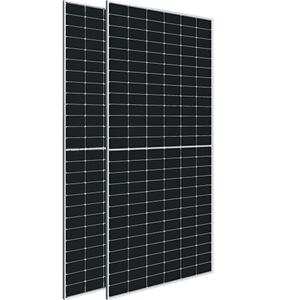
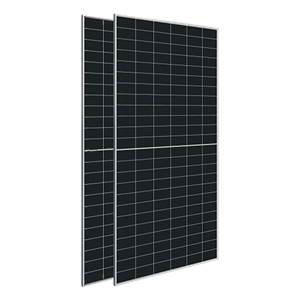
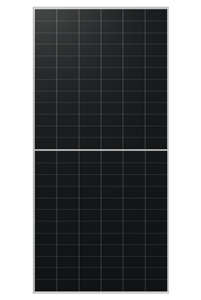
Single glass means the front side of the module has a tempered glass cover, while the rear encapsulant uses a polymer backsheet (typically white or transparent TPT/TPE). This is the classic, most widely deployed panel configuration in the world. It is lighter than dual glass, universally compatible with standard racking systems, and easier to handle on a rooftop installation crew.
When Does Single Glass Make Sense Over Dual Glass?
This is something I ask every buyer before I give them a quote. Single glass modules are the right choice when:
The installation is a rooftop residential or commercial project where weight and racking load matter
The project is in a standard humidity environment — not coastal salt spray, not extreme desert conditions
The buyer is operating with a cost-first budget constraint and bifacial gain from reflected light is not achievable (e.g., dark rooftops with no albedo)
The logistics chain requires standard packing density — single glass modules pack more safely per pallet
If any of those do not apply to your situation, we need to have a different conversation — possibly about dual glass or N-type modules. But for a substantial portion of rooftop and mid-scale C&I projects worldwide, mono PERC single glass remains the most cost-effective, most proven, most readily available technology choice in 2026.
PERC Single Glass vs. Dual Glass vs. N-Type: Which Should You Buy?
I put together this comparison based on real projects we have handled at Xinjie. These are not theoretical numbers from a manufacturer's datasheet — they reflect what I see coming through our order pipeline from Southeast Asia, the Middle East, and Africa.
| Criteria | PERC Single Glass | PERC Dual Glass | N-Type TOPCon / HPBC |
|---|---|---|---|
| Module Efficiency | 20–22% | 20–22% (+bifacial gain) | 22–24.1% |
| Weight | Lighter (~21–23 kg) | Heavier (~26–28 kg) | Varies (24–28 kg) |
| Relative Price (per W) | Lowest | +8–15% vs SG | +15–30% vs PERC SG |
| Durability (Harsh Climate) | Good (standard) | Excellent (salt/sand) | Excellent |
| Best Application | Rooftop, C&I, Off-grid | Ground-mount, Coastal | Utility, Premium C&I |
| Annual Degradation | ~0.45–0.55%/yr | ~0.40–0.50%/yr | ~0.30–0.40%/yr |
| Certification Availability | CE, TUV, ETL, UKCA | CE, TUV, ETL, CGC | CE, TUV, ETL, IAF |
| OEM / Private Label | ✅ Supported | ✅ Supported | ✅ Supported |
💡 Practical Take from Mr. Xiao
If your buyer contacts me asking for "the cheapest solar panel," I do not just send a price list. I ask three questions: What is the installation type? What is the climate zone? What is the target market's certification requirement? The answers determine whether PERC single glass is right for them — or whether we are setting them up to resell a product that fails a market audit in twelve months.
Certifications That Actually Matter for Your Target Market
This is one of the areas where I see the most confusion — and the most risk. Buyers assume that "CE certified" means the panel is safe to sell anywhere. It does not. Market access requirements vary significantly, and a panel that sails through customs in Dubai can get stopped at a European port for missing the wrong stamp.
Here is a quick reference by key export market:
🇪🇺 European Union & UK
CE marking — required for market access across the EU. Covers electromagnetic compatibility and low-voltage directive compliance.
TUV certification (IEC 61215 / IEC 61730) — de facto mandatory for bankable projects and insurance acceptance.
UKCA — required specifically for the UK market post-Brexit. Xinjie holds UKCA certification, which not all Chinese suppliers bother to obtain.
🇺🇸 United States & Canada
ETL certification — widely accepted equivalent to UL listing. For single glass PERC panels entering the US market, this is the most practical path. Xinjie holds Single Glass ETL certification specifically.
CNAS Laboratory Certificate — confirms in-house testing capability, which matters for projects that require third-party verified batch testing.
🇦🇺 Australia
Australia now mandates IEC 61215:2021 compliance for panels to qualify for government incentive programs. Panels certified to older standards are being phased off approved product lists. If your customer base is Australian installers, you need to verify the exact revision year on the TUV certificate, not just the mark itself.
🌏 Middle East, Southeast Asia, Africa
CGC certification (China General Certification Center) is recognized in several Belt-and-Road market procurement frameworks.
Intertek Laboratory Certificates provide an internationally credible quality benchmark for buyers in markets without a single dominant certification body.
For UAE and Saudi Arabia projects specifically, TUV and Intertek markings are typically accepted by EPCs and lenders.
⚠️ Red Flag to Watch
When you request a certificate from a supplier, check three things: (1) Is the certificate number verifiable on the certification body's public database? (2) Is the exact model number on the certificate the same as what you are ordering — not a similar model? (3) Is the certificate currently valid, not expired? I have seen buyers receive a TUV certificate for a 400W panel and assume it covers a 550W module from the same factory. It does not work that way.
At Xinjie, we hold the following certifications across our PERC single glass product range: CE, TUV, CGC, CNAS Laboratory Certificate, ETL (Single Glass), IAF TUV, Intertek Laboratory Certificate (×2), UKCA, PID test, and TUV Salt Spray Test. We provide scanned originals and direct verification links on every sales inquiry — not just logos on a product page.
2026 Price Benchmarks and What Is Pushing Costs Up
I will be transparent about this because I think buyers deserve real data, not a vague "contact us for pricing" response that wastes everyone's time.
The 2026 pricing environment for Chinese solar modules has shifted in a way that caught some buyers off-guard. Three forces are at work simultaneously:
1. China's VAT Export Rebate Removal (April 1, 2026)
China eliminated its 9% VAT export rebate for photovoltaic products effective April 1, 2026. This was confirmed government policy. In practical terms, it means Chinese exporters lost a subsidy that previously allowed more aggressive pricing. Buyers who secured stock before the deadline are in a better position than those shopping now.
2. Silver and Polysilicon Cost Pressure
Silver is a critical raw material in solar cell metallization paste. In 2025–2026, silver prices surged significantly — some analysts tracked increases of over 100% year-on-year at peak. Mono PERC cells use more silver per watt than some alternative architectures. Combined with polysilicon supply constraints, the upstream cost pressure is real.
3. The Post-Correction Pricing Floor
The era of ultra-low pricing driven by manufacturing overcapacity in 2023–2024 has ended. The market is stabilizing at a higher floor. Industry tracking suggests module prices in the second half of 2026 are expected to hover in a higher range than the previous year's lows, as export economics, materials, and demand dynamics realign.
| Product Type | Indicative FOB Range (2026) | Notes |
|---|---|---|
| PERC Mono Single Glass (400–430W) | ~$0.08–0.11/W | Volume >100kW; FOB Ningbo/Shanghai |
| PERC Mono Single Glass (545–600W) | ~$0.09–0.12/W | Standard half-cut cell; certified models |
| Branded PERC (LONGi / JA Solar) | +20–35% vs generic | Requires authorized distributor channel |
| OEM / Private Label PERC SG | MOQ-dependent; quote on request | Includes branding, custom spec, sampling |
💡 Mr. Xiao's Pricing Tip
Always ask for CIF pricing — not just FOB — so you can compare total landed cost. Freight from China to your port, insurance, and import duty all affect real project economics. A supplier quoting $0.085/W FOB might land higher than a supplier quoting $0.095/W CIF once you factor in freight surcharges. We model both scenarios for our customers before they commit.
How to Qualify a Chinese Supplier Beyond the Brochure
Every supplier will send you a factory audit report, a product catalogue, and a price list. Those documents tell you almost nothing about whether the supplier will actually deliver what they promise. Here is the five-step qualification process I recommend to first-time importers — and to experienced buyers who have been burned before.
Step 1: Verify the Factory Location and Production Ownership
China has many trading companies that present themselves as factories. Ask specifically: "Do you own the production line or are you sourcing from a third-party manufacturer?" For buyers who need OEM flexibility or production audits, this question is non-negotiable. At Xinjie, our production line is located in Hefei, Anhui Province — the same city as our development department. We welcome customers to arrange third-party professional institution inspections at any time. We mean that literally, not as a marketing phrase.
Step 2: Request Certification Originals and Cross-Check Them
As I mentioned earlier, request the full certificate — not a summary logo — and verify the certificate number on the issuing body's public database. For TUV certificates, check TUV Rheinland or TUV SUD's online validation portal. For ETL, check Intertek's directory. This takes ten minutes and eliminates a large class of documentation fraud.
Step 3: Ask About Production Lead Time and Packaging
A supplier who cannot tell you exactly how their modules are packaged for export is a supplier who has not thought carefully about your cargo arriving intact. At Xinjie, we wrap the four corners of photovoltaic panels with cardboard reinforcement to prevent cracking from transport bumps, and we separate each module with individual packaging so that every panel is an independent unit. This is not a marketing claim — it is a logistics standard I personally insist on because I have seen what happens to unprotected panels after 30 days at sea.
Step 4: Confirm the Payment and Delivery Terms
We use TT payment and commit to shipping within 7 working days of confirmed order. Any supplier who cannot give you a specific, contractual shipping timeline is not organized enough to manage your project on schedule.
Step 5: Check the After-Sales Service Infrastructure
What happens when a module has a defect 18 months after delivery? Who responds? How quickly? At Xinjie, we provide 24-hour service and we have built the after-sales commitment into our sales process — not as a footnote on the last page of a contract, but as one of the four promises we make to every customer from day one.
Why Xinjie Is Different from a Typical Trading Company
I want to spend a few paragraphs on this because the word "factory" gets thrown around loosely in Chinese solar marketing, and you deserve a clear picture of what Xinjie actually is.
Xinjie was established in 2008. Our headquarters is in Xiangyang, our sales operations run from Wuhan, and our production and R&D teams are based in Hefei — which puts us in the heart of China's photovoltaic manufacturing corridor in Anhui Province. We are not a pure trading company, and we are not a tiny workshop. We sit in a specific position in the supply chain that I think is genuinely useful to mid-size international buyers: we combine direct production access with a full-service sales and after-sales organization.
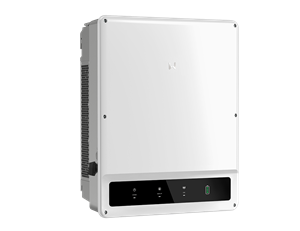
Our product range centers on solar cell modules, but we have built out a complete ecosystem around them — inverters (we are an authorized agent for SINENG Electric and a certified GoodWe distributor), batteries, mounting systems, wires and cables, and solar street lighting. This matters because a buyer who comes to us for PERC single glass panels can also source the rest of their system from a single vetted partner rather than managing four separate supplier relationships across China.
We are authorized distributors and agents for: JA Solar (Official 2026), LONGi (Premium Strategic Partner), Huawei Digital Power (Silver Distributor), and SINENG Electric (2025–2026). That means when we supply you a branded panel, the authorization is verifiable and the warranty chain goes directly to the manufacturer.
Our current PERC single glass product range runs from compact 415W modules for residential applications through high-watt 600W P-type configurations for commercial rooftops. We provide design support, installation guidance, and after-sales service — not just a box on a pallet.
If you tell us your monthly electricity consumption in kWh, the installation scenario, and the target market, we will give you a recommended system configuration and a formal quotation within 24 hours. That is the service model we have built, and it is one we are proud of.
FAQ
Q1: What is the minimum order quantity for PERC single glass solar panels from Xinjie?
We accommodate orders from sample quantities up to full container loads. For commercial pricing tiers, buyers typically start at 100+ panels. Large project orders of 1MW+ receive dedicated logistics and pricing support. Contact us with your project scope and we will give you a tailored MOQ and lead time — usually within 24 hours.
Q2: Are PERC single glass panels still competitive against N-type in 2026?
For specific use cases — yes, absolutely. PERC single glass remains the most cost-effective option for standard rooftop and off-grid applications where the site does not benefit from bifacial gain and where budget is the primary constraint. N-type makes more sense when efficiency per square meter is critical or the project has long-term bankability requirements from financiers who value lower degradation rates.
Q3: Can Xinjie supply panels with my company's private label branding (OEM)?
Yes. We support OEM and ODM services for customers who want to build a private label solar product. This includes custom branding on the panel frame, custom technical documentation, and adapted specifications. Our in-house R&D team in Hefei handles OEM customization. Lead times and MOQs for OEM orders are discussed case by case.
Q4: What certifications does Xinjie hold for PERC single glass panels?
For our PERC single glass range, we hold: CE, TUV (including TUV SUD and TUV Nord), ETL (Single Glass), UKCA, CGC, CNAS Laboratory Certificate, Intertek Laboratory Certificate, IAF TUV, and PID test certification. We provide original certificate copies and direct verification links upon inquiry.
Q5: How does Xinjie protect solar panels during international sea freight?
We use cardboard corner protection on all four panel corners to prevent frame cracking and cell micro-fractures from shipping vibration. Each panel is individually wrapped so that physical contact between modules is eliminated. This packaging standard significantly reduces breakage rates — which directly protects your claim rate and customer satisfaction on delivery.
Q6: Does the 2026 VAT export rebate removal affect Xinjie's pricing significantly?
It does affect the broader market pricing baseline — there is no honest way to say otherwise. However, Xinjie's position as both a direct production partner and an authorized brand distributor allows us to optimize procurement timing and source from the most cost-competitive production batches available. We recommend buyers contact us directly to discuss current pricing and lock in rates for confirmed Q3/Q4 2026 projects.
Q7: How long does it take to ship an order of PERC panels from China to Southeast Asia / Middle East / Africa?
We commit to dispatch within 7 working days of confirmed order and TT payment. Sea freight transit times vary by destination: approximately 7–14 days to Southeast Asia, 18–25 days to the Middle East (UAE/Saudi Arabia), and 25–35 days to West or East Africa. We arrange both sea freight (FCL and LCL) and air freight depending on urgency and quantity.
Ready to Source PERC Single Glass Solar Panels?
Tell us your project scenario, monthly kWh target, and destination market.
Mr. Xiao's team will send you a qualified system recommendation and formal quote within 24 hours.
📞 +86-19072080183 | 📠 027 86521066 | 📍 No.1001, Shun'an Building, Hongshan District, Wuhan, Hubei, China
Mr. Xiao
Senior Solar Sourcing Specialist — Hubei Xinjie New Energy Technology Co., Ltd.
Mr. Xiao has spent over fifteen years in China's photovoltaic supply chain, covering manufacturing operations in Hefei and international sales out of Wuhan. He specializes in helping mid-size distributors, EPC contractors, and project developers in Southeast Asia, the Middle East, and Africa navigate Chinese solar sourcing — from panel selection and certification verification to logistics and after-sales support. He writes from direct field experience, not from secondary research.
References
CouleeEnergy (January 2026). Chinese Solar Panel Prices 2026: Strategic Procurement Guide. couleenergy.com
JMB iPV Tech (February 2026). How Chinese Solar Module Prices Are Shifting in the Global Market. jmbipvtech.com
SolarTechOnline (October 2025). Mono PERC Solar Panels: Complete 2025 Guide to Technology & Cost. solartechonline.com
ESZoneo (2026). Solar Panel Prices in China: A Global Buyer's Sourcing Guide for 2026. eszoneo.com
CouleeEnergy (April 2025). Solar Panel Certifications TUV, CE and Standards IEC 61215 & 61730 Explained. couleenergy.com
Hubei Xinjie New Energy Technology Co., Ltd. (2026). Official Company Profile, Certifications & Product Catalogue. xinjieenergy.com
Made-in-China.com (2026). Solar Panel Price Index — Live Market Reference. made-in-china.com
SolarTechOnline (2025). Monocrystalline Solar Panel Efficiency: Complete Guide [20–26%]. solartechonline.com