PERC Solar Panel Efficiency Comparison 2026: PERC vs TOPCon vs Polycrystalline

Mr. Xiao — International Sales Director, Xinjie New Energy
15+ years in PV supply chain · Wuhan HQ + Hefei Production Base · Authorized distributor: JA Solar, LONGi, Huawei Digital Power
PERC Solar Panel Efficiency Comparison 2026: Where PERC Sits Against TOPCon, HJT, and Polycrystalline — And Why That Still Matters for Mid-Budget Projects
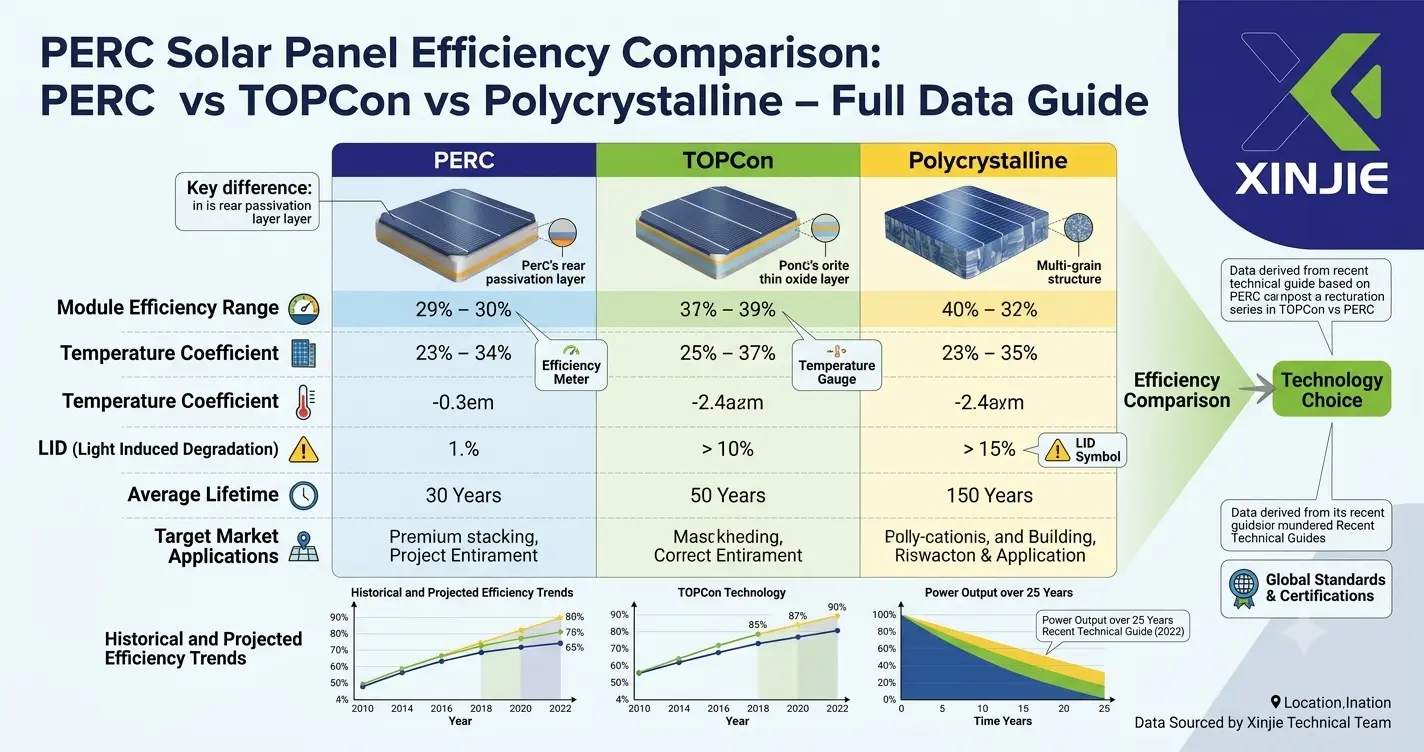
A system design engineer I work with in Germany sent me a blunt question two months ago: "Mr. Xiao, is PERC even worth specifying in 2026, or should everything just be TOPCon now?" It is a fair question. Every manufacturer conference deck I see puts TOPCon center stage, and the marketing noise around N-type technologies has become so loud that some buyers assume PERC is already a legacy footnote.
It is not. And the reason it is not comes down to one thing that technology marketing rarely leads with: project budget reality. Not every client has a Tier 1 TOPCon budget. Not every rooftop in Osaka, Seoul, or Hamburg needs laboratory-ceiling efficiency. And in markets where the grid buy-back rate is low, the cost-per-kilowatt-hour calculation changes significantly — sometimes in PERC's favor.
This article goes through the actual numbers. Efficiency ranges, temperature coefficients, degradation curves, price differentials, and the project scenarios where each technology wins on engineering merit — not marketing preference. I will also place Xinjie's PERC single-glass line in context, because I think suppliers who cannot explain when their own product is the wrong choice have no credibility when they say it is the right one.
📋 Table of Contents
Efficiency Numbers: What Each Technology Actually Delivers at Module Level
Monocrystalline vs Polycrystalline: A Debate That Is Already Settled
PERC vs TOPCon: A Technical Head-to-Head on Every Metric That Counts
Temperature Coefficient: The Metric Engineers Read, Buyers Ignore
Degradation Rates Over 25 Years: What the Warranty Math Shows
Master Comparison Table: PERC vs TOPCon vs HJT vs Polycrystalline
When PERC Is the Right Engineering Choice — And When It Is Not
Xinjie's PERC Single-Glass Line: How It Fits the 2026 Market
1. The 2026 PV Technology Landscape in One Honest Summary
Before I get into individual numbers, here is where the market actually stands in mid-2026 — not where the press releases say it is heading.
Crystalline silicon still dominates at roughly 95% of global production. Within that, the technology hierarchy is clear and not especially controversial: HJT sits at the premium end, TOPCon is the current mainstream default for new large-scale installations, and monocrystalline PERC occupies the mid-range cost-performance segment with an enormous installed base and a long track record of real-world data.
Polycrystalline, which was once a major market segment, now accounts for less than 1% of new production in 2026 — a genuinely remarkable collapse over roughly five years. It is effectively obsolete for new project specification. I will address it briefly for completeness but will not pretend it is a live competitor in any serious procurement conversation today.
Panels with TOPCon cells crossed 65% of global production capacity in 2024 — the first time any technology other than PERC had led since the early 2010s. That data point matters because it tells you something about where manufacturing investment is going, which directly affects long-term component availability and warranty support.
None of this means PERC is dead. It means PERC has found its lane — and for technical buyers who understand cost modeling rather than just efficiency headlines, that lane is still commercially significant.
2. Efficiency Numbers: What Each Technology Actually Delivers at Module Level
The most common mistake in technology comparisons is mixing cell-level efficiency with module-level efficiency. Cell efficiency is the number that appears in research papers and record announcements. Module efficiency is what your energy model runs on. They are not the same figure — module efficiency is always lower because of optical losses, interconnect resistances, and cell-to-module packing factors.
Here is what the technologies deliver at the module level in mass commercial production in 2026:
Monocrystalline PERC (Single Glass)
The most fundamental advantage of Mono PERC over standard monocrystalline is efficiency. Standard monocrystalline panels typically achieve 17–19% module efficiency. Mono PERC raises this to 20.5–22% through the rear passivation layer's dual benefits of photon recycling and reduced recombination. With the passivated rear cell, an aluminum oxide layer introduced at the rear end of the cell results in lower electron recombination, hence more efficiency than the old BSF cell.
N-Type TOPCon
Mono PERC modules currently operate at 20.5–22% module efficiency, while TOPCon modules reach 22–23.5% in mass production formats. The efficiency lead is real and consistent across manufacturers, not just a few showcase models. In February 2026, JinkoSolar and the Chinese Academy of Sciences published results reporting a certified 26.66% efficiency for an industrial-scale TOPCon cell on an M10 wafer — 83.8% of the theoretical efficiency limit for silicon. That is a laboratory-to-production pipeline result, not a commercial module specification, but it indicates how much headroom the architecture still has.
HJT (Heterojunction)
Mono PERC/TOPCon modules deliver about 21.5–24.5% efficiency in 2026, while HJT reaches 24–25.5%. Maximum commercial HJT efficiency runs 22–24% at module level, with excellent high-temperature performance of only –0.25%/°C. HJT commands a meaningful price premium — it is the correct choice for constrained rooftops where every square meter of panel area must work as hard as possible.
Polycrystalline
Polycrystalline panels deliver 15–17% module efficiency. More grain boundaries mean more electron recombination and lower efficiency — this is why polycrystalline cells top out at 15–17%, roughly 25% less efficient than monocrystalline. For a new project specification in 2026, this matters: the efficiency gap is no longer offset by a meaningful cost advantage, as I will address in the cost section.
💡 Practical Take for System Design Engineers
When running energy simulations (PVsyst or equivalent), always input module-level efficiency, not cell-level efficiency. The marketing headline for a TOPCon module might cite 24%+ cell efficiency while the module-level nameplate sits at 22.8%. The difference affects your DC/AC ratio calculation, your string configuration, and ultimately your predicted annual yield. Always verify against the published IEC-tested datasheet, not the product brochure.
3. Monocrystalline vs Polycrystalline: A Debate That Is Already Settled
I include this section primarily because buyers in certain markets — particularly smaller EPC contractors and first-time importers in Southeast Asia and Africa — still ask about polycrystalline as a budget option. The engineering answer in 2026 is clear.
The monocrystalline vs. polycrystalline debate largely ended around 2020, when the manufacturing cost gap that had favored polycrystalline shrank to near zero while efficiency differences remained substantial. In 2026, monocrystalline panels dominate residential installations at 95%+ market share.
Monocrystalline panels offer 19–23% efficiency versus 15–17% for polycrystalline — meaning you need fewer panels and less roof space for the same output. Historically polycrystalline had a price advantage, but the gap has nearly closed in 2026. Both monocrystalline PERC and polycrystalline tier-1 panels cost around $0.30–$0.45/W at the module level. The efficiency advantage of mono means smaller systems achieve the same output — often resulting in similar or lower total system cost despite the slightly higher per-watt price.
The practical implication for a 10 kW system is not abstract. A 5 kWp system using Mono PERC modules typically requires 10–12 modules, versus 14–16 for older polycrystalline panels. Fewer modules means less mounting hardware, less wiring, fewer penetrations in a roof structure, and a faster installation. The labor cost differential often exceeds the panel cost differential — in the wrong direction for polycrystalline.
Many leading manufacturers have reduced or completely phased out polycrystalline production in favor of more advanced mono PERC, TOPCon, and N-type cells. Polycrystalline panels still exist, but they are more common in budget or second-hand markets. For a buyer procuring new panels for a project with any kind of performance warranty or bankability requirement, specifying polycrystalline in 2026 introduces unnecessary supply chain risk. The manufacturing base has largely moved on.
4. PERC vs TOPCon: A Technical Head-to-Head on Every Metric That Counts
This is where the real comparison question sits for most technical buyers in 2026. Not mono versus poly — that is settled — but PERC versus TOPCon. Let me go through it category by category.
Cell Architecture
PERC is P-type silicon with a passivation layer on the rear surface. PERC solar cells are based on P-type silicon material where doping is done by boron in order to generate positive charge carriers. With the passivated rear cell, an aluminum oxide layer was introduced at the rear end of the cell, resulting in lower electron recombination.
TOPCon builds on a different base entirely. The tunnel oxide layer in TOPCon is thin enough that electrons can pass through it via quantum tunneling. The same oxide layer suppresses the movement of minority carriers, dramatically reducing recombination and raising open-circuit voltage. The net effect: higher efficiency from the same surface area, with better stability over time.
Light-Induced Degradation (LID)
Light-Induced Degradation is a known characteristic of P-type PERC silicon, caused by boron-oxygen interactions. Best PERC modules reach approximately 21.5–22% efficiency — a ceiling that TOPCon was engineered to break through. TOPCon uses N-type silicon, which does not have the boron-oxygen LID issue. This matters for first-year yield calculations on large projects — LID can represent 1–2% of total annual output in year one for PERC modules, and this should be accounted for in energy models.
Low-Light Performance
Both technologies perform well under diffuse irradiance conditions — overcast German winters, foggy Korean autumn mornings, partially shaded Japanese rooftops. TOPCon holds a modest advantage in very-low-irradiance conditions due to its higher open-circuit voltage, but for most Central European and Northeast Asian project locations, the difference in measured annual yield is smaller than the datasheet efficiency gap suggests.
Bifacial Capability
Mono PERC is available in both single-glass and dual-glass bifacial formats. Single-glass PERC is monofacial. TOPCon is predominantly bifacial dual-glass. For ground-mount projects where bifacial gain is actively engineered — albedo management, elevated mounting structures — TOPCon bifacial pulls ahead significantly in annual yield per unit area. For rooftop installations where rear irradiance is minimal, the bifacial premium largely disappears.
5. Temperature Coefficient: The Metric Engineers Read, Buyers Ignore
Temperature coefficient is one of the most consequential technical parameters in solar panel selection — and one of the least discussed in commercial procurement conversations. It measures how much power output falls for every degree Celsius above 25°C (Standard Test Conditions). Lower is better.
Here is what the different technologies deliver:
Polycrystalline P-type:
–0.39 to –0.43%/°C
Monocrystalline PERC (P-type):
approximately –0.35%/°C
N-type TOPCon:
approximately –0.30%/°C
HJT:
as low as –0.25%/°C
PERC averages –0.34%/°C compared to TOPCon's –0.30%/°C. This 0.04% difference matters more than most installers realize.
Let me make that concrete for a rooftop in Japan. A typical mid-summer cell operating temperature in Tokyo reaches approximately 55–60°C — that is 30–35°C above STC. At –0.35%/°C, a PERC panel loses roughly 10.5–12.25% of its rated output at those temperatures. A TOPCon panel at –0.30%/°C loses 9–10.5%. The absolute power difference on a 450W panel at peak summer conditions is 6–8W per panel — not dramatic in isolation, but across a 500 kW commercial rooftop in summer, that compounds.
For buyers in Germany or Korea — where summer peak temperatures are lower than India or Southeast Asia — temperature coefficient is relevant but less decisive than it would be in a tropical climate. For buyers in those markets, it becomes a primary selection criterion rather than a secondary one.
🔎 Pro Tip: Nominal Operating Cell Temperature (NOCT)
Temperature coefficient specifications are measured at STC (25°C, 1000 W/m²). Real-world performance uses NOCT — typically 44–48°C — as the reference cell temperature under standard operating conditions (800 W/m², 20°C ambient, 1 m/s wind). When comparing panel datasheets, check the NOCT value alongside the temperature coefficient. A panel with a lower NOCT (better thermal dissipation from the frame and cell layout) will outperform a panel with an identical temperature coefficient but higher NOCT.
6. Degradation Rates Over 25 Years: What the Warranty Math Shows
Efficiency at STC on day one is a snapshot. What determines your project's IRR over a 25-year project finance period is the degradation curve — how much of that initial efficiency your panels retain each year.
Standard warranty terms for the mainstream technologies in 2026:
Mono PERC: ≤2% in year one (accounting for LID stabilization), ≤0.55% per year thereafter, ≥80% at year 25
N-type TOPCon: ≤1% in year one (no LID), ≤0.40% per year thereafter, ≥87.4% at year 30 (many manufacturers now offer 30-year performance warranties)
HJT: ≤0.25–0.30% per year — the best degradation profile in commercial production
Manufacturer warranties place Mono PERC at 0.55% annual degradation and TOPCon at 0.40%. The gap looks small in year one. Over 25 years, it represents a meaningful difference in total energy output and therefore in return on investment.
To quantify that gap: a 500W PERC panel retaining 80% output at year 25 produces 400W. A 500W TOPCon panel at 0.40% annual degradation produces approximately 452W at year 25 — a 13% higher final-year output from the same nameplate panel. Over a 25-year yield model, the cumulative energy difference is significant — and this is the primary technical argument for TOPCon in long-duration, project-financed installations.
For buyers with shorter planning horizons — 10–15 year replacement cycles, rental property installations, lower-grade rooftop structures with limited load capacity — the 25-year degradation curve argument weakens considerably. PERC's superior degradation relative to polycrystalline (≤0.55%/year versus ≤0.70%/year for older poly) still makes it the clear choice within the mono/poly comparison.
7. Price Per Watt and Cost-Efficiency Positioning in 2026
Price comparisons between technologies are the most time-sensitive data in any solar article, because module pricing moves quarterly. What I can tell you with confidence about the 2026 market structure:
TOPCon modules currently carry a 5–15% price premium over Mono PERC in comparable wattage and format configurations. PERC modules maintain a current price advantage; recent RFPs show a $0.03 per watt delta, meaning for a 100 kW commercial installation, that represents $3,000 in upfront savings.
The price gap between TOPCon and PERC has narrowed to 10–15%, while the performance advantages of TOPCon — higher efficiency, lower degradation, no LID, better bifacial capability — are unambiguous. This narrowing is what makes the technology comparison genuinely nuanced in 2026: the financial case for PERC rests primarily on capex sensitivity, while the technical case for TOPCon rests on lifetime yield.
For a mid-budget commercial rooftop project — the scenario most relevant to Xinjie's typical customers — the relevant question is: what is the budget ceiling per installed watt, and does the project's electricity price environment justify the TOPCon premium through improved lifetime output? In high-electricity-price markets like Germany or Japan, the TOPCon premium usually justifies itself within 5–7 years. In markets with lower electricity tariffs or shorter financing horizons, PERC's lower capex is the more rational choice.
Field evidence confirms that polycrystalline quotes still winning bids in 2026 are almost always on projects above 500 kW, where the aggregate savings run into tens of thousands of dollars. Below that scale, PERC's cost positioning versus both polycrystalline and TOPCon is the strongest in its history.
👉 Request a current PERC Single-Glass price list from Xinjie — quotation includes certification documents
8. Master Comparison Table: PERC vs TOPCon vs HJT vs Polycrystalline (2026 Data)
| Parameter | Mono PERC (Single Glass) | N-Type TOPCon | HJT | Polycrystalline |
|---|---|---|---|---|
| Module Efficiency (2026) | 20.5–22% | 22–23.5% | 24–25.5% | 15–17% |
| Temperature Coefficient | –0.34 to –0.35%/°C | –0.29 to –0.32%/°C | –0.25 to –0.27%/°C | –0.39 to –0.43%/°C |
| Annual Degradation Rate | ≤0.55%/year | ≤0.40%/year | ≤0.25–0.30%/year | ≤0.70%/year |
| Year-1 LID Loss | Up to 2% (P-type) | No LID (N-type) | No LID (N-type) | Up to 2–3% (P-type) |
| Performance at Year 25 | ≥80% (standard warranty) | ≥87.4% (30-yr warranty) | ≥90%+ | ≥80% (if available) |
| Bifacial Availability | Single-glass (monofacial) / Dual-glass (bifacial) | Predominantly bifacial dual-glass | Bifacial dual-glass | Monofacial only (rare) |
| Relative Price Premium (vs. PERC baseline) | Baseline (0%) | +5–15% | +20–35% | –2 to –5% (shrinking) |
| Market Production Status (2026) | Active, large installed base | Mainstream / dominant growth | Premium / niche growing | <1% production — phased out |
| Best-Fit Project Type | Mid-budget residential, C&I, budget-sensitive utility | Utility-scale, C&I with strong yield requirements | Space-constrained rooftops, hot climates | Not recommended for new specification |
Sources: Manufacturer datasheets (JA Solar, LONGi, Trina Solar, ASTRONERGY, AIKO), industry benchmarks from CleanEnergyReviews, SolarTodo, and WebsolEnergy — consolidated as of mid-2026. All figures are module-level commercial production ranges, not cell-level or laboratory records.
9. When PERC Is the Right Engineering Choice — And When It Is Not
I told my German colleague who asked the opening question something like this: the right panel for a project is the one whose cost-efficiency tradeoff fits the project's financial model. Efficiency alone does not determine value. Here is my honest engineering framework:
PERC single-glass is the stronger choice when:
Budget ceiling is binding. If the project's per-watt capex limit makes TOPCon unworkable in the financial model, PERC at 20.5–22% still significantly outperforms anything polycrystalline ever delivered — and does so with a well-documented 10+ year real-world performance record.
The project horizon is under 15 years. For shorter payback periods, the TOPCon degradation advantage (0.15% per year better) does not compound long enough to justify the price premium in most low-to-medium electricity tariff markets.
The roof structure has weight constraints. PERC single-glass panels are lighter than dual-glass TOPCon bifacial modules. In older commercial buildings where roof load calculations are tight, this is a real engineering constraint — not a preference.
Compliance certification depth matters most.
In commercial application since 2015, PERC technology raised module efficiency from 17–18% to 20–21% — which means there is a decade of real-world certification test data, field performance records, and bankability precedent behind it. For buyers who need to satisfy conservative project finance auditors or utility interconnection engineers, a technology with 10+ years of IEC-certified field data carries institutional credibility that newer architectures are still building.
Mid-budget residential and small C&I projects in Central Europe, Japan, and Korea.
From a 2026 benchmark perspective, Mono PERC remains a stable and cost-efficient option, while TOPCon delivers better performance across all critical technical parameters. For projects where finances are the priority concern, Mono PERC stands out as a viable option.
TOPCon is the stronger choice when:
Project finance horizon is 25+ years and yield degradation is modeled in the IRR.
The installation is ground-mount with active rear-irradiance management (bifacial configuration).
The ambient operating temperature regularly exceeds 35°C, making the temperature coefficient difference meaningful in annual yield calculations.
The electricity tariff environment rewards every marginal kWh through net metering or premium feed-in structures.
Neither technology is universally superior. The right answer depends on the inputs of your specific project financial model — not on which technology has the most impressive efficiency record on paper.
👉 Compare Xinjie's PERC Single-Glass and N-Type TOPCon product lines side by side
10. Xinjie's PERC Single-Glass Line: Where It Fits in the 2026 Market
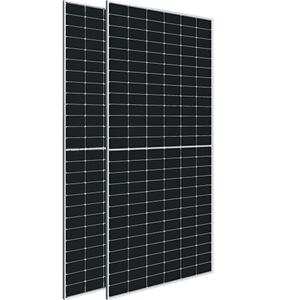
Xinjie has been in the PV supply chain since our founding, with production at our Hefei facility and sales operations in Wuhan. Our PERC single-glass product line is sourced through our authorized distribution partnerships with JA Solar and LONGi — two manufacturers whose monocrystalline PERC half-cell technology is among the most thoroughly tested and deployed in the world.
Key Technical Positioning
Module efficiency range: 20.5–22% (400W–545W available in half-cell monocrystalline format)
Temperature coefficient: –0.34 to –0.35%/°C — standard PERC P-type specification
Degradation warranty: ≤2% year one, ≤0.55%/year thereafter, ≥80% at year 25
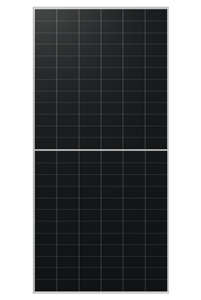
Cell technology: Half-cell monocrystalline PERC — reduces hot-spot risk and improves partial-shade performance versus full-cell configurations
PID resistance: Confirmed by independent PID certificate — relevant for systems with high string voltage operating in humid climates (Japan, Korea coastal installations)
Certification stack: CE, TUV Rheinland, TUV SUD, TUV Nord, ETL (Intertek), UKCA, CGC, CNAS — full documentation provided with every quotation
Why Half-Cell Technology Matters for Efficiency
All Xinjie PERC single-glass panels in our current line use half-cell architecture — the cells are laser-cut into two halves, which reduces the current per cell and therefore the resistive losses (I²R losses). The practical benefit: in real-world installations with partial shading from trees, chimneys, or antenna structures, half-cell PERC modules outperform full-cell PERC modules of nominally identical efficiency ratings. The datasheet efficiency numbers look the same; the field performance in imperfect conditions does not.
Available Brand Lines Through Xinjie
Through our authorized partnerships, our PERC single-glass range includes JA Solar DeepBlue series modules and LONGi Hi-MO series — both with full manufacturer warranty validity and official chain-of-custody documentation. For buyers who have been burned by grey-market sourcing where warranty claims go nowhere, our authorized distributor status is directly relevant: JA Solar's 2026 authorization and LONGi's Premium Strategic Partner designation mean the factory warranty is enforceable, not decorative.
11. FAQ: PERC Solar Panel Efficiency Comparison 2026
Q: What is the efficiency of PERC solar panels in 2026?
Mono PERC raises module efficiency to 20.5–22% through the rear passivation layer's dual benefits of photon recycling and reduced recombination. Cell-level efficiency for PERC runs slightly higher at 22–23.5%, but the number that goes into your energy model is module-level efficiency — always check the IEC-tested datasheet, not marketing material.
Q: Is TOPCon better than PERC in every situation?
On pure technical metrics — efficiency, temperature coefficient, degradation, LID — yes, TOPCon is superior. But "better" in procurement terms depends on budget constraints, project horizon, site conditions, and electricity tariff. Choosing the right technology today is not just about upfront cost, but about efficiency, degradation, and overall return on investment over time. For budget-constrained mid-scale projects with a 10–15 year financial model, PERC's lower capex frequently wins the financial comparison despite TOPCon's superior technical profile.
Q: What is Light-Induced Degradation (LID) and does it affect PERC panels?
Light-Induced Degradation is a characteristic of P-type silicon, caused by boron-oxygen interactions under initial light exposure. PERC is a P-type technology and does experience LID — typically 1–2% output reduction in the first weeks of field operation. Modern PERC manufacturing includes LID reduction treatments that minimize this effect, and it stabilizes after initial exposure. TOPCon and HJT, being N-type architectures, do not have LID. For year-one yield calculations on large projects, this should be modeled explicitly rather than ignored.
Q: Why is polycrystalline no longer competitive in 2026?
Polycrystalline is being phased out. The price gap has nearly closed in 2026 — both monocrystalline PERC and polycrystalline tier-1 panels cost $0.30–$0.45/W at the module level. With the cost advantage largely gone and efficiency 25–30% lower than PERC, there is no engineering rationale for specifying new polycrystalline panels in 2026 except for very large (500+ kW) utility projects where aggregate cost savings still justify the performance penalty.
Q: How does PERC perform in low-light conditions such as overcast German or Japanese winters?
Monocrystalline PERC performs well under diffuse irradiance relative to older technologies. The half-cell configuration used in modern PERC modules specifically improves performance under partial shading conditions by reducing the impact of shaded cells on the overall string output. TOPCon holds a marginal advantage in very-low-irradiance conditions due to its higher open-circuit voltage, but for most Northern European and Northeast Asian project locations, the real-world annual yield difference is typically 1–3% — meaningful in a project finance model but not the dominant decision factor.
Q: What wattage range does Xinjie's PERC single-glass line cover?
Our PERC single-glass line covers 400W through 545W in monocrystalline half-cell format, sourced through authorized JA Solar and LONGi partnerships. Specific wattage availability depends on current stock and production schedules. Contact us with your project volume and required delivery timeline and we will confirm available SKUs and lead times within one business day. We ship within 7 days of order confirmation and accept TT payment.
Q: How does PERC single-glass compare to PERC dual-glass (bifacial)?
PERC single-glass uses a conventional polymer backsheet and is a monofacial panel — it only collects light from the front surface. PERC dual-glass replaces the backsheet with a second glass layer, making the panel bifacial and enabling rear irradiance capture. Bifacial panels have transparent backsheets or glass-glass construction that allow light to enter from both the front and rear of the panel. The rear side captures reflected light — this albedo gain adds 5–30% more energy depending on surface reflectivity. For rooftop installations with typical dark roof surfaces, bifacial gain is minimal. For ground-mount or elevated installations with reflective surfaces below the array, dual-glass bifacial PERC or TOPCon is the appropriate specification.
Need Technical Help Choosing Between PERC, TOPCon, or HJT for Your 2026 Project?
Mr. Xiao will review your project specs — roof area, target output, budget, market — and recommend the right product line with full datasheet and certification documentation in the first reply.
📞 +86-19072080183 | 📠 027 86521066 | 📍 Shun'an Building, Tuanjie Avenue, Hongshan District, Wuhan, Hubei
Mr. Xiao — International Sales Director
Hubei Xinjie New Energy Technology Co., Ltd. | Wuhan HQ + Hefei Production | Est. 2017
Mr. Xiao has spent 15+ years working across the PV supply chain — from cell manufacturing to project commissioning — in China, Europe, Japan, Korea, and the Middle East. His writing comes directly from the engineering and procurement conversations he has daily, not from industry press releases. He welcomes technical inquiries from system design engineers and can be reached at xinjie@hbxjenergy.com or by phone at +86-19072080183.
References
PowerSphere Renewable — TOPCon vs PERC Solar Panels: Efficiency, Degradation, and Temperature Performance (May 2026) — powersphererenewable.com
A1 Solar Store — Solar Panel Cell Technology Explained: PERC vs TOPCon vs HJT (April 2026) — a1solarstore.com
TheGreenWatt — TOPCon vs Mono PERC Solar Panels: Which Technology Will Lead in 2026? (June 2026) — thegreenwatt.com
Websol Energy System — Mono PERC Solar Panel: Advantages, Disadvantages, and Everything You Need to Know in 2026 (July 2026) — websolenergy.com
SolarProGuide — Monocrystalline vs Polycrystalline Solar Panels 2026: Complete Data-Driven Comparison (March 2026) — solarproguide.com
SolarTodo — Solar Panel Efficiency Comparison 2026: Mono vs Bifacial vs HJT vs Perovskite (May 2026) — solartodo.com
PV-Maps — Solar Panel Technology Comparison 2026: Monocrystalline vs Bifacial vs Perovskite (July 2026) — pv-maps.com
CleanEnergyReviews — Most Efficient Solar Panels 2026: Temperature Coefficients and Cell Technology Guide (March 2026) — cleanenergyreviews.info
Alpex Solar — TOPCon vs Mono PERC Solar Panels: Which Is Better in 2026? (April 2026) — alpexsolar.com
Energyscape Renewables — N-Type TOPCon vs PERC: 2026 Installer Guide (December 2025 / updated 2026) — energyscaperenewables.com
BLUETTI Power — Monocrystalline vs Polycrystalline Solar Panels: Efficiency, Cost & Best Choice 2026 (March 2026) — bluettipower.com
IEC 61215:2021 — Terrestrial Photovoltaic (PV) Modules: Design Qualification and Type Approval