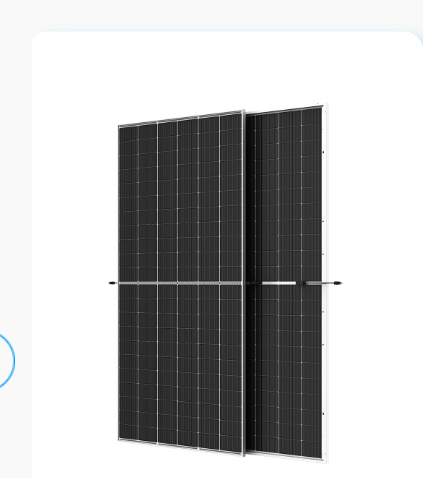
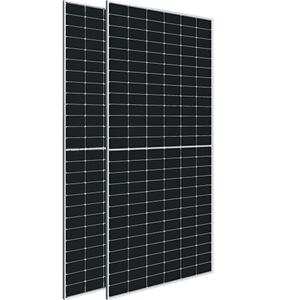
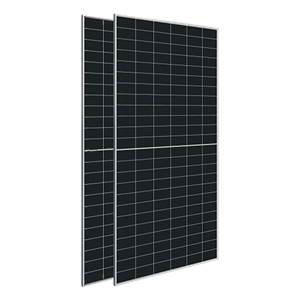
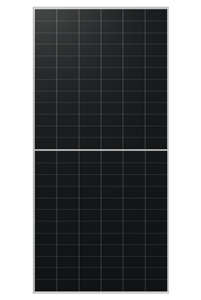
Trina Solar Bifacial Double Glass PV Modules: The Future of High-Efficiency Solar Energy

- Trina
- China
- 7days
- more than 10000pcs/month
Bifacial double-glass photovoltaic modules represent one of the most important advancements in modern solar technology.
By combining bifacial energy generation, double-glass durability, and advanced n-type solar cells, these modules deliver higher efficiency, improved reliability, and lower electricity costs.
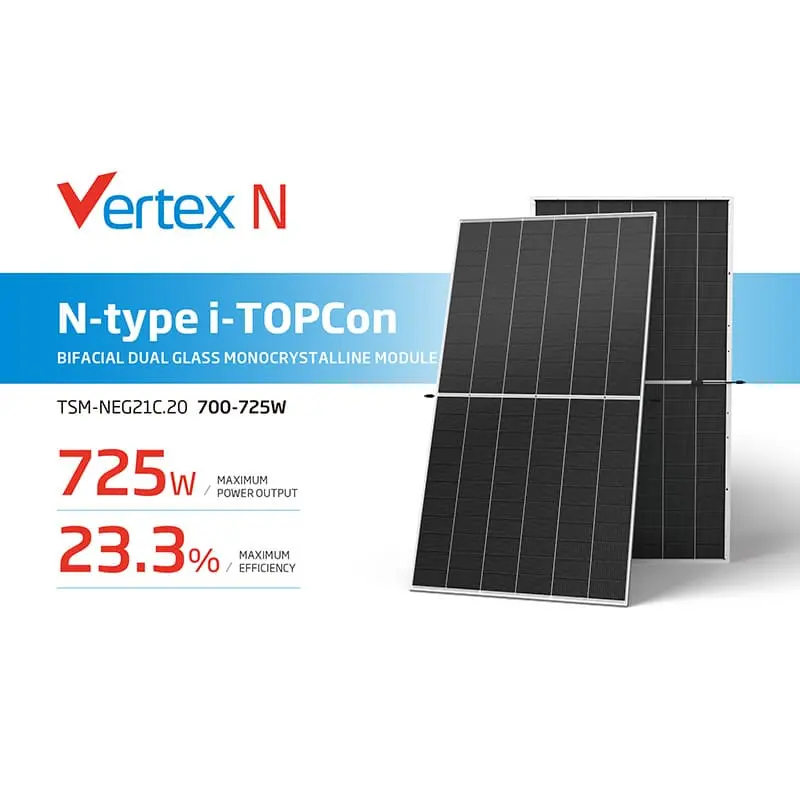
For developers, investors, and businesses seeking high-performance solar solutions, technologies such as the Vertex N bifacial modules offer a powerful pathway toward more sustainable and cost-effective energy production.
As the world continues its transition toward renewable energy, advanced photovoltaic innovations will play a critical role in shaping the future of global power generation.
The Evolution of Solar Module Technology
Solar panels have evolved dramatically since the early days of photovoltaic technology. Traditional modules were designed with single-glass structures and P-type silicon cells, which provided reliable power generation but had limitations in efficiency and long-term degradation.
As the global demand for clean energy grew, solar manufacturers began investing heavily in research and development to improve photovoltaic performance.
This led to several key innovations, including:
N-type solar cell technology
Large wafer formats <Bifacial power generation <Double-glass module structures
Advanced anti-degradation materials
These improvements have enabled modern solar modules to produce significantly more electricity while maintaining excellent durability over decades of operation.
N-Type Solar Cells: A New Generation of Efficiency
At the heart of modern high-performance photovoltaic modules lies n-type solar cell technology.
Compared to conventional P-type cells, N-type cells offer several important advantages.
Higher conversion efficiency
N-type cells can convert a greater portion of sunlight into electricity, increasing the total power output of each solar panel.
Lower degradation
Traditional solar cells often suffer from light-induced degradation (LID) and potential induced degradation (PID).
N-type cells are significantly less affected by these issues, which helps maintain stable performance over time.
Better temperature performance
Solar panels operating in hot climates can lose efficiency as temperatures rise.
N-type modules typically have a lower temperature coefficient, meaning they lose less efficiency under high temperatures.
This makes them particularly suitable for regions such as the Middle East, Africa, and Southeast Asia.